
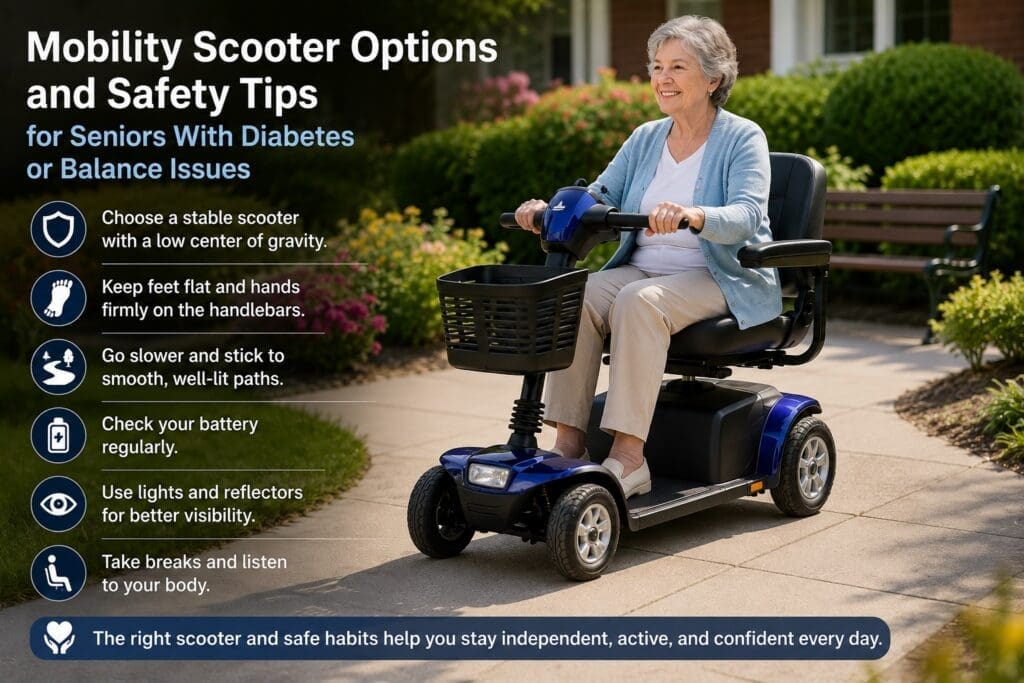
Diabetes and balance disorders can quietly change how safe and confident daily movement feels. Numbness in the feet. Reduced sensation. Dizziness. Muscle weakness. Slower reaction time. These challenges increase fall risk and make longer walks stressful.
Mobility scooters can provide stability and energy conservation while helping seniors remain active and socially engaged. The key is choosing the right features and using the scooter safely.
Here’s what families should consider.
Why Diabetes and Balance Issues Increase Fall Risk
Diabetes often affects circulation and nerve health. Peripheral neuropathy can reduce feeling in the feet, which impacts stability. Balance disorders may come from inner ear issues, stroke history, medication side effects, or general muscle weakness.
Common challenges include:
- Unsteady walking
- Difficulty feeling uneven ground
- Slower reaction time
- Increased fatigue
- Reduced endurance
When walking feels uncertain, many seniors begin limiting trips outside the home. That restriction can lead to reduced activity, skipped meals, and social isolation.
A mobility scooter helps remove distance as a barrier while maintaining safety.
Stability Is the First Priority
For seniors with balance concerns, stability matters more than speed.
Look for scooters with:
- Four-wheel design for a wider base
- Anti-tip wheels
- Low center of gravity
- Solid frame construction
Four-wheel scooters typically provide more side-to-side stability than three-wheel models, especially outdoors or on uneven surfaces.
Easy Mount and Dismount
Balance issues often show up during transitions. Stepping onto a platform or twisting out of a seat can feel unstable.
Important features include:
- Swivel seat
- Adjustable seat height
- Low step-on platform
- Non-slip foot surface
A swivel seat allows the rider to turn fully before standing. This reduces twisting and lowers fall risk during transfers.
Comfortable, Supportive Seating
For seniors with diabetes, prolonged pressure on certain areas can increase skin sensitivity and circulation concerns.
Look for:
- Thick, pressure-distributing cushioning
- Adjustable armrests
- Proper lumbar support
- Seat widths that fit correctly
Even weight distribution reduces discomfort during longer rides and supports better posture.
Smooth Acceleration and Braking
Sudden movement can be unsettling for someone with balance instability.
Scooters with:
- Gradual acceleration
- Smooth electronic braking
- Adjustable speed settings
help create predictable, controlled movement.
Lower maximum speed settings are often safer for seniors managing dizziness or neuropathy.
Battery Range and Energy Conservation
Fatigue is common among seniors with diabetes. A reliable battery range prevents anxiety about running out of power mid-trip.
Consistent range allows seniors to:
- Attend meals in living communities
- Visit friends
- Participate in group activities
- Keep medical appointments
Conserving energy through scooter use can actually support more overall daily participation.
Visibility and Awareness
For seniors with slower reaction times or mild cognitive changes, visibility becomes important.
Helpful safety features include:
- Bright LED headlights
- Rear reflectors
- Audible warning signals
- Clear control displays
These features increase awareness for both the rider and others nearby.
Indoor and Community Living Safety
In senior living communities, long hallways and busy dining areas can feel overwhelming for someone with balance challenges.
A mobility scooter allows safer movement by:
- Reducing the need to rush
- Preventing fatigue-related stumbles
- Providing stable seating during travel
It also helps seniors continue attending meals and activities, which supports nutrition and mental stimulation.
If you’d like to compare models designed for indoor stability, you can visit our Richmond location, our Fredericksburg location, or our Williamsburg location to see options in person.
Outdoor Safety Tips for Riders With Diabetes or Balance Issues
When riding outdoors:
- Avoid steep inclines when possible
- Slow down before turning
- Stay on smooth, well-lit paths
- Avoid wet leaves or gravel
- Keep both hands on the tiller
Because neuropathy can reduce sensation in the feet, pay attention to foot placement and ensure your feet remain flat and stable on the platform.
Monitor Circulation and Comfort
Seniors with diabetes should check skin regularly, especially after longer rides. Even well-cushioned seats should be evaluated for pressure comfort.
Adjust seating as needed and avoid sitting in one position for extended periods without shifting slightly.
If you’re unsure whether a scooter seat provides adequate support, we can help you evaluate fit and comfort at Comfort Medical Supply.
If you’d like personalized guidance, you can always reach out and we’ll walk through daily routines and medical considerations together.
Addressing the “Will This Make Them Weaker?” Concern
Families often worry that using a scooter will reduce walking and cause decline.
For seniors managing diabetes or balance issues, what usually happens without mobility support is reduced participation.
They may:
- Skip meals because the walk feels unsafe
- Avoid community activities
- Limit outdoor time
- Stay seated longer out of fear
That pattern often leads to less movement overall, not more.
A scooter helps remove the barrier of unsafe distance. Many seniors still walk short, manageable distances safely. The scooter supports longer trips so daily engagement continues.
Regular Maintenance Matters
For riders managing health conditions, reliability is critical.
Before heavy use:
- Check battery levels
- Inspect tires
- Ensure brakes respond smoothly
- Confirm the seat locks securely
Routine inspections reduce the risk of unexpected issues.
If you’d like a seasonal safety check or battery evaluation, we’re happy to help.
Choosing the Right Fit
Every senior’s needs are different. Some struggle more with balance. Others deal primarily with neuropathy or fatigue.
The right scooter should match:
- Physical strength
- Living environment
- Daily routine
- Comfort needs
Testing models in person helps determine which design feels stable and easy to control.
Making the Right Choice
Mobility scooters can play a powerful role in protecting independence for seniors managing diabetes or balance concerns. The right features improve stability, conserve energy, reduce fall risk, and support continued social engagement.
When movement feels uncertain, thoughtful mobility support restores confidence.
If you’re exploring options for yourself or a loved one, we’re ready to help you find a solution that prioritizes safety, comfort, and long-term independence.