
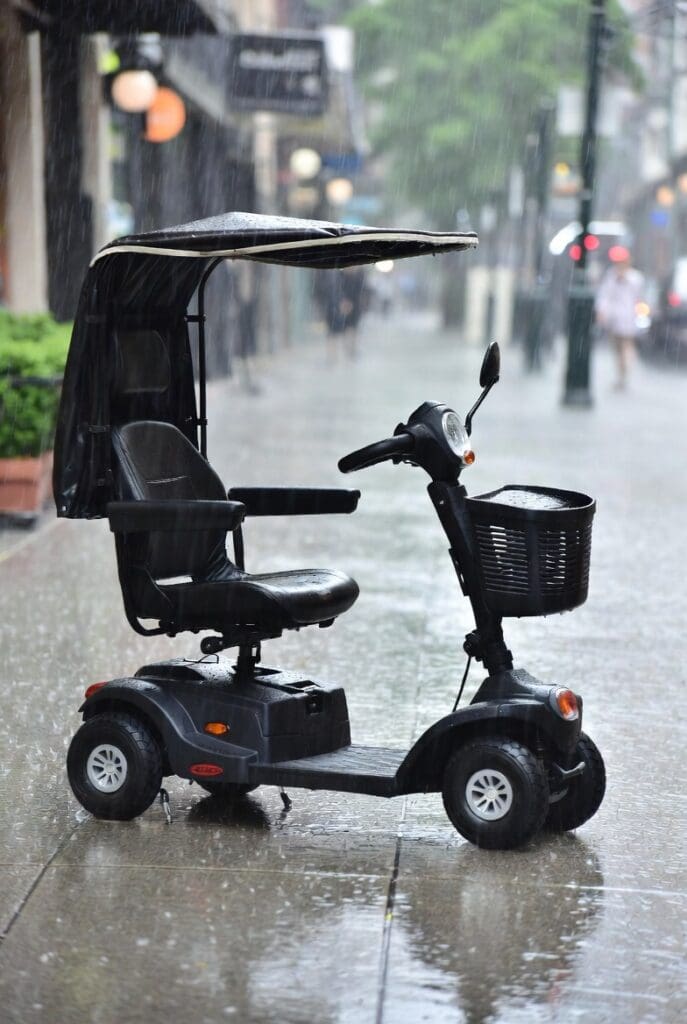
Weather changes how a mobility scooter performs. Cold air affects batteries. Rain reduces traction. Wet leaves and icy patches increase slip risk. For seniors who rely on scooters daily, winter and rainy seasons require a few adjustments to stay safe and confident.
The good news is simple. With the right preparation and habits, you can continue using your scooter comfortably year-round.
How Cold Weather Affects Your Mobility Scooter
Cold temperatures directly impact battery performance. Batteries rely on chemical reactions to produce power. When temperatures drop, those reactions slow down.
This can lead to:
- Reduced driving range
- Slower acceleration
- Shorter battery life during outings
- Longer charging times
You may notice that your scooter doesn’t travel as far in January as it did in July. That’s normal. Planning for shorter distances helps prevent unexpected power loss.
Protecting Your Battery in Winter
Battery care becomes more important during colder months.
To protect performance:
- Store your scooter indoors whenever possible
- Charge after every use
- Avoid leaving the battery in freezing temperatures overnight
- Allow the scooter to warm slightly before riding
If your scooter must be stored in a garage, consider insulating the space or moving the battery indoors when possible.
If you have questions about battery testing or replacement, you can always reach out and we’ll help you evaluate performance.
Rain and Wet Surfaces: Traction Matters
Wet pavement reduces traction. Painted crosswalk lines, smooth concrete, and tile floors can become slippery.
To improve safety:
- Reduce your speed
- Take turns slowly
- Avoid sudden stops
- Increase following distance
Scooters with larger tires and good tread patterns handle wet surfaces better. If your tires are worn, replacing them before winter improves stability.
Navigating Leaves, Ice, and Snow
Wet leaves can be just as slick as ice. Snow and black ice create unpredictable conditions.
In these situations:
- Avoid steep inclines
- Stay on cleared pathways
- Avoid riding during active snowfall
- Choose routes with consistent lighting
If sidewalks are untreated or icy, it may be safer to wait until conditions improve.
Adjusting Speed for Seasonal Safety
Many scooters allow speed adjustments. Lowering the maximum speed during winter reduces the risk of losing control.
Slower speeds allow more time to react to:
- Slippery patches
- Pedestrians wearing bulky winter clothing
- Reduced visibility during rain
Controlled movement is safer than fast movement when conditions are uncertain.
Waterproofing and Protection
Most mobility scooters are water-resistant but not fully waterproof. Direct exposure to heavy rain can affect electronics and control panels.
To reduce risk:
- Avoid deep puddles
- Cover the control panel during heavy rain
- Dry the scooter thoroughly after exposure
- Wipe moisture from battery compartments
If your scooter gets soaked, let it dry completely before charging.
Visibility During Winter Months
Winter brings shorter days and lower light conditions. Rain also reduces visibility.
Improve safety by:
- Using built-in headlights and reflectors
- Wearing bright or reflective clothing
- Ensuring rear reflectors are clean
- Avoiding poorly lit routes at night
Visibility protects both you and those around you.
Protecting Yourself From the Elements
Staying warm and dry improves reaction time and comfort.
Consider:
- Weather-resistant lap blankets
- Gloves that maintain grip
- Waterproof outerwear
- Canopies or weather covers for certain scooter models
Cold hands reduce steering precision. Proper gloves help maintain control without restricting movement.
Braking and Handling in Wet Conditions
Wet conditions can slightly increase stopping distance.
Practice safe braking by:
- Applying brakes gradually
- Avoiding sudden throttle release at high speeds
- Testing braking response in safe, open areas
If you notice delayed stopping or unusual noise during wet weather, it may be time for a brake inspection.
Seasonal Maintenance Checklist
Before winter arrives, schedule a quick safety check.
Inspect:
- Tire tread depth
- Brake responsiveness
- Battery strength
- Electrical connections
- Headlights and reflectors
Routine maintenance reduces the chance of mechanical issues during harsh conditions.
At Comfort Medical Supply, we help customers prepare their scooters for seasonal changes. A quick inspection can improve reliability and peace of mind.
Indoor Community Riding During Winter
For seniors living in retirement or assisted living communities, winter weather often means more indoor travel.
When riding indoors:
- Slow down on tile floors
- Watch for wet entryways
- Avoid crowded hallways during peak times
- Keep pathways clear in your apartment
Scooters can help residents continue attending meals and activities even when outdoor weather is harsh. Staying socially engaged supports both physical and mental health.
If you’d like to review indoor-friendly scooter options, you’re welcome to visit our Richmond location, our Fredericksburg location, or our Williamsburg location to compare models built for smooth, stable handling.
When to Avoid Riding
Even with precautions, there are times when it’s safer not to ride.
Avoid using your scooter when:
- Ice covers sidewalks
- Snow accumulation exceeds tire clearance
- Heavy rain reduces visibility significantly
- Severe wind affects balance
Waiting for safer conditions prevents unnecessary risk.
Making the Right Seasonal Adjustments
Mobility scooters provide year-round independence, but seasonal awareness protects both your equipment and your safety.
By adjusting speed, protecting your battery, maintaining good traction, and preparing for weather changes, you can continue riding confidently through winter and rainy months.
If you want help evaluating your scooter’s readiness for colder weather, we’re here to guide you. Seasonal maintenance and the right safety habits make a meaningful difference in comfort and reliability.